Avoiding Legal Issues with Receipt Generators
Receipt generators can be helpful tools for creating receipts for legitimate purposes like replacing lost receipts, managing financial records, or producing materials for business or entertainment projects, such as realistic receipt photos. However, misuse, such as creating fake receipts for tax deductions, reimbursements, or refunds, is illegal and can lead to serious consequences, including fines and imprisonment.
Key Takeaways:
- Use Responsibly: Only create receipts for lawful purposes, such as personal record-keeping or testing business tools.
- Verify Accuracy: Ensure all details (e.g., store name, date, amounts) match real transactions or intended uses.
- Understand Risks: Fraudulent use can result in criminal charges, civil penalties, and reputational damage.
- Maintain Transparency: Document why each receipt was created and keep records for compliance.
Receipt generators are tools, not shortcuts for dishonest activities. Use them ethically to avoid legal trouble.
Legal vs Illegal Uses of Receipt Generators: A Compliance Guide
Checklist: Legal Ways to Use Receipt Generators
Know When Receipt Generators Are Appropriate
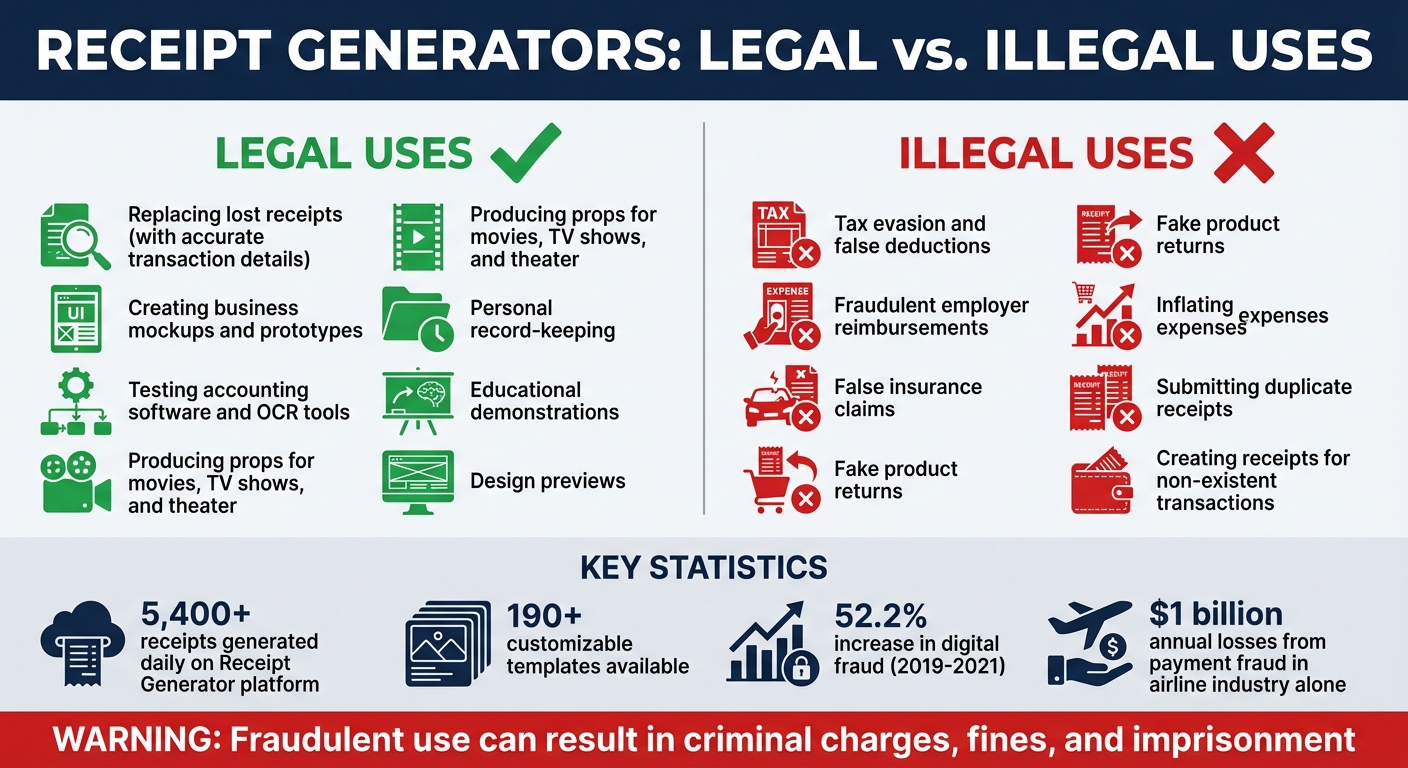
Receipt generators can be incredibly useful when used for the right reasons. For personal situations, they’re great for recreating lost receipts - provided you remember the transaction details accurately. On the business side, companies often use these tools to create custom receipt templates for prototypes, presentations, or to test software like accounting systems, OCR tools, and expense trackers. They’re also a go-to resource for creative professionals, helping produce realistic props for movies, TV shows, theater productions, and graphic design work. For example, platforms like Receipt Generator handle over 5,400 receipts daily, offering users access to more than 190 customizable templates for these legitimate purposes.
These lawful uses highlight the importance of staying compliant and avoiding unethical or illegal applications.
Never Use Receipts for Fraud or Misrepresentation
Misusing receipt generators for fraudulent purposes is a serious offense. For instance, submitting a fake receipt for a transaction that never happened - whether for employer reimbursements, tax deductions, insurance claims, or product returns - is strictly prohibited. Receipt Maker emphasizes this point: "Using generated receipts for fraud or any illegal activity is strictly prohibited."
Fraudulent use, like claiming unmade expenses or processing fake returns, can lead to severe consequences, including criminal charges and hefty fines. Stick to using receipt generators for legitimate purposes, such as personal record-keeping, creative projects, or business template creation. Always prioritize transparency and ensure compliance with legal standards.
sbb-itb-2232899
Checklist: Creating Accurate and Realistic Receipts
Accurate and realistic receipts are crucial for maintaining legal compliance and ensuring financial records are trustworthy.
Verify All Receipt Information
Getting every detail right is non-negotiable when generating receipts for legitimate purposes. Start by double-checking all fields before finalizing the document. This includes confirming the store name, address, contact number, transaction date, and time. Additionally, ensure that each line item accurately reflects the product or service name, quantity, and unit price. Carefully calculate the subtotal, tax rate, and grand total, making sure they align with the local tax percentage for the specific location and date.
Whenever possible, use a reference document - an actual receipt from the same merchant can help you verify layout details like font style, logo placement, receipt number format, or the way payment card digits are displayed.
| Essential Receipt Field | Details to Verify for Accuracy |
|---|---|
| Header Information | Store name, address, and phone number |
| Transaction Metadata | Transaction date, time, and unique identifier |
| Line Items | Product/service names, quantities, and unit prices |
| Financial Summary | Subtotal, tax (e.g., GST/VAT/Sales Tax), and grand total |
| Payment Proof | Payment method (e.g., Visa, Cash) and confirmation details |
Cross-check your generated receipt with bank statements or credit card transaction histories to ensure the date and total amount match your records. Export the finalized receipt as a high-resolution PNG to maintain clarity and professionalism.
Once all details are verified, confirm that your receipt template is appropriate for legitimate purposes.
Use Custom Templates for Legitimate Purposes Only
After verifying the receipt's details, choose a template that closely resembles the style of the original document. Receipt Generator offers over 190 customizable templates from well-known retailers and restaurants, tailored for valid uses such as replacing lost receipts, creating business mockups, testing accounting software, or producing props for creative projects. When selecting a template, match the format to the industry - retail receipts, for example, differ in style from restaurant receipts, and each has its own conventions.
Complete all fields to avoid leaving gaps that might raise suspicion. This includes store details, item descriptions, currency symbols, payment methods, and visual elements like logos or QR codes. The goal is to create a receipt that supports your legitimate purpose - whether for personal record-keeping, software testing, or creative work - without misrepresenting information or engaging in fraudulent activities like tax evasion, false reimbursements, or invalid insurance claims.
Checklist: Know the Legal Consequences of Misuse
Understanding the risks tied to misusing receipt generators is crucial for steering clear of severe penalties and safeguarding yourself from potential legal trouble.
Understand Fraud Laws in Your Country
Using receipts fraudulently can violate laws related to fraud, bankruptcy, and contracts. Fictitious receipts - documents that falsely represent goods or transactions - hold no legal validity. These fake records are often used to deceive creditors, lenders, or investors about a business's actual assets or collateral. For instance, someone might use a generated receipt to claim ownership of inventory they don’t actually have, creating a false sense of collateral when applying for a loan.
In the United States, fraud laws differ across state jurisdictions, meaning the definition and consequences of fraud can vary depending on where it happens. What qualifies as fraud in one state might not meet the same criteria elsewhere. If you're using a receipt generator for legitimate purposes, such as replacing lost receipts or creating mockups for your business, ensure all details accurately reflect real transactions or clearly indicate the document’s intended use. This distinction is essential to avoid any legal complications.
Know the Penalties for Fraudulent Receipt Use
The misuse of receipts can lead to both criminal and civil consequences. Criminal charges might include financial misrepresentation, particularly when fake receipts are used in bankruptcy claims, insurance filings, or to secure financing under false pretenses. Civil penalties often involve lawsuits from creditors, investors, or business partners who experience financial losses due to fraudulent activity. These penalties could include hefty fines, legal costs, harm to your professional reputation, reduced business opportunities, and even imprisonment, depending on the severity of the offense.
If you come across a fake receipt in a transaction or face accusations of using one, document all relevant communications immediately and seek advice from a legal expert. Legitimate uses of receipt generators - such as digitizing receipts for personal records, creating mockups for app development, or designing templates for your business - are entirely safe when the receipts accurately reflect real transactions or are clearly labeled as samples for authorized purposes. Always ensure transparency to avoid unintended legal risks.
Checklist: Follow Ethical Guidelines
Setting clear ethical standards for using receipt generators is crucial for protecting your business from legal issues and distinguishing legitimate use from fraudulent activities. Consider this: digital fraud jumped by 52.2% between 2019 and 2021. In the airline industry alone, payment fraud results in losses of at least $1 billion annually. By adopting ethical guidelines, you can align with legal best practices while implementing internal safeguards to prevent misuse.
Create Clear Usage Policies
Develop a written policy that outlines acceptable and unacceptable uses of receipt generators. Acceptable uses might include creating business mockups, design previews, educational demonstrations, or replacing lost receipts. On the other hand, explicitly prohibit uses like tax evasion, fraudulent reimbursements, or false insurance claims.
To reinforce these policies, consider adding measurable goals, like tracking losses from fraudulent activities, and requiring review processes for all shared or exported content. The policy should also state that the company reserves the right to suspend or revoke access for anyone who violates these rules. Address common fraudulent practices, such as submitting personal expenses as business trips, inflating costs (e.g., extra mileage), or submitting duplicate receipts.
Once your policies are in place, regular employee training becomes vital to ensure compliance.
Train Employees on Responsible Use
Consistent training equips employees to recognize fraud patterns and understand the legal consequences of misuse. Shai Cohen, Senior VP of Global Fraud Solutions at TransUnion, highlights that “fraudsters tend to shift their focus every few months from one industry to another,” often targeting industries experiencing rapid growth in transactions. Training helps your team stay vigilant and reduces the likelihood of unintentional involvement in fraudulent activities.
Make sure employees are familiar with your company’s procedures for handling lost receipts and know whether recreated receipts are acceptable for internal records. The AltexSoft Editorial Team points out that "education can help a lot in reducing the chance of being scammed". Emphasize that receipt generators are administrative tools meant for legitimate purposes, not a way to fabricate evidence for non-existent expenses.
Checklist: Tips for Business and Personal Use
Receipt generators come packed with features, but how you use them can make all the difference between staying on the right side of the law and running into trouble. The following tips build on earlier checklists, offering practical advice for both business and personal use. The main takeaway? Understand which features are meant for lawful purposes and ensure you keep thorough records to reflect your intent.
Use Receipt Generator Features Properly
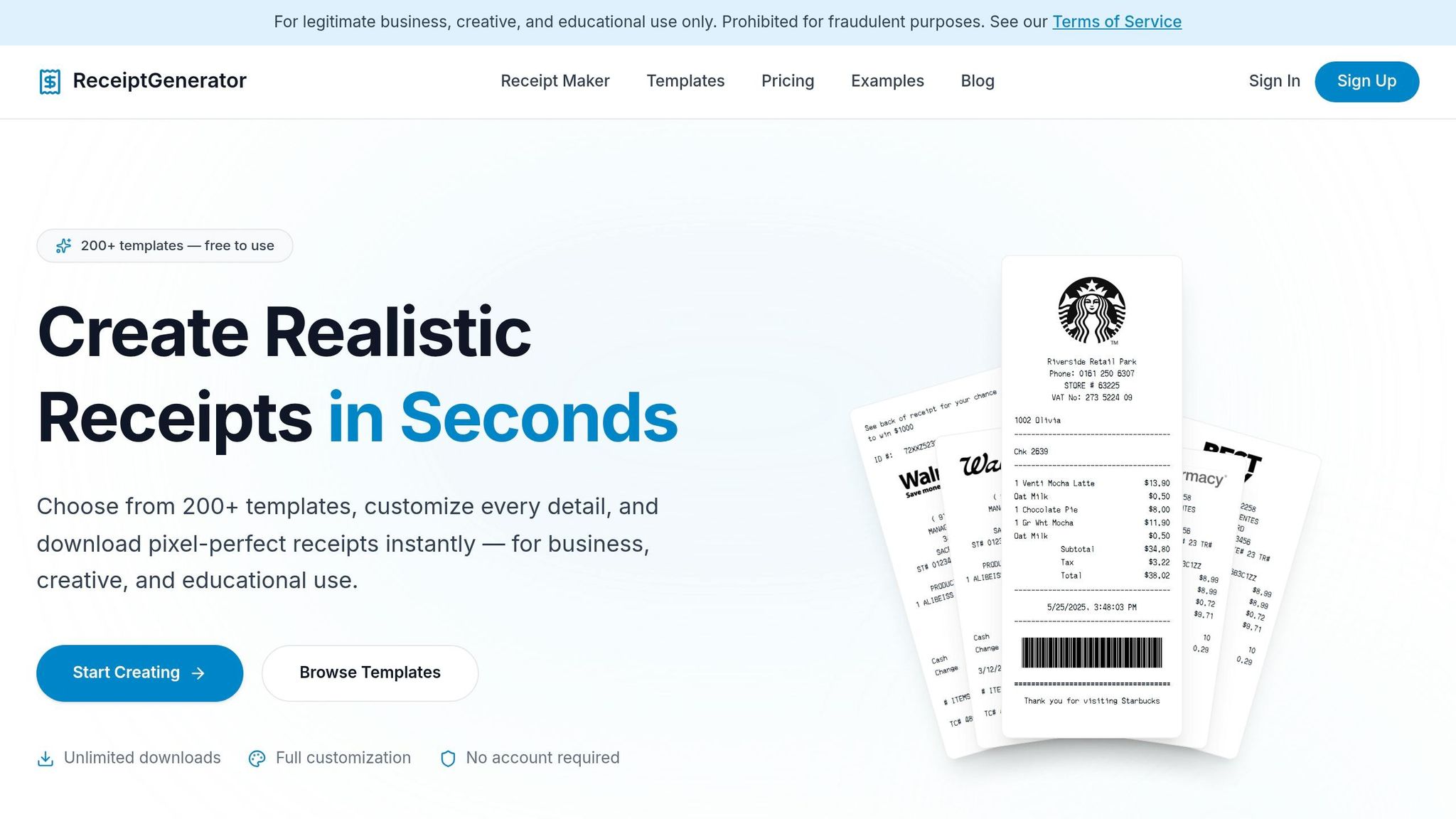
Receipt Generator (https://receiptgenerator.co) provides access to over 190 customizable templates from well-known retailers. These templates are particularly useful for replacing lost receipts from legitimate transactions or creating professional mockups for business purposes. For example, if you misplace a $250 office supply receipt, you can recreate it by matching the date, amount, and payment method to your credit card statement.
When customizing receipts, staying compliant is critical. Business receipts should include your legal name, physical address, contact details, and any necessary tax identifiers. For transactions between businesses, be sure to use fields for Tax ID, VAT, or GST numbers - these are vital for valid tax deductions. The drag-and-drop editor makes it easy to arrange receipt details professionally, but accuracy is key. Every element, from dates to vendor information and amounts, must align with the original transaction.
Keep Records of Why You Created Each Receipt
Using the features correctly is just one part of the equation. Keeping a clear record of why each receipt was created is equally important for staying compliant. Detailed documentation can help avoid disputes and protect you from accusations of misrepresentation. Consider maintaining an audit log that explains the purpose of every generated receipt. For instance:
"March 15, 2026 – Replacement receipt for Best Buy laptop purchase ($1,299.99): original lost during office move, verified against Chase credit card statement ending in 4523."
Make sure to store these receipts securely, ideally with encryption, and establish a retention policy that fits your needs. Many businesses follow IRS guidelines and keep receipts for about seven years, though this may vary depending on your industry.
For business-related receipts, share copies with all parties named on the document as soon as possible. This level of transparency not only supports ethical practices but also ensures everyone involved has a shared record of the transaction.
Conclusion
Receipt generators can be helpful tools when used responsibly for legitimate purposes like recordkeeping or creative projects. However, their proper use depends on clear intent and complete honesty. It's important to remember that these tools are simply template-based design services - they are not official receipts issued by merchants or payment processors. Recognizing this distinction is key to ensuring compliance.
Ethical use starts with being mindful of customization. Avoid using these receipts for dishonest purposes such as tax evasion, insurance fraud, false reimbursements, or refund scams. Engaging in such activities not only violates terms of service but also breaches fraud laws. Additionally, if you upload logos, trademarks, or other brand elements, make sure you have the legal right to use them.
As previously mentioned, always double-check that all the details on the receipt are accurate and truthful before submitting or sharing it. To further safeguard against misuse, keep internal records that clearly document the purpose behind creating each receipt. This ensures transparency and provides a reliable audit trail.
FAQs
When is a generated receipt legal to use?
A receipt is considered legitimate when it clearly outlines essential transaction details such as the date, store name, item descriptions, and payment information. These receipts are typically used for valid purposes like replacing lost originals or maintaining accurate records. However, creating or using fake receipts for dishonest activities - like fraud, deception, or submitting false claims - is illegal and can lead to severe legal repercussions. Always ensure your actions align with both ethical and legal guidelines.
How can I prove a generated receipt matches a real purchase?
To make sure a receipt is legitimate and corresponds to an actual purchase, cross-check its details with the retailer's records. Look for elements like store logos, transaction numbers, and purchase dates to ensure consistency. Additionally, you can use tools designed to detect tampering or forgery. Verifying that receipts match real transactions helps prevent potential disputes or complications.
Should I label a generated receipt as a sample or mockup?
Labeling a generated receipt as a sample or mockup is crucial. This makes it clear that the document is not an official transaction record. Doing so promotes transparency and helps minimize the risk of any legal complications when using receipt generators responsibly.